
Case Study: Dynamic Content Architecture & Adaptive Learning
Transforming SME expertise into a scalable, interactive, and adaptive digital learning experience
Overview
Nessy Learning needed to convert dense subject matter expertise into a structured, adaptive online learning system. My challenge was to create a content architecture that dynamically adapts as learners progress, while ensuring clarity, accessibility, and developer-ready specifications.
Role: Content Architect & Lead Producer
Skills: Information Architecture, Content Systems, UX Content Design, Developer Handoff
Organization: Nessy Learning
The Challenge: Bridging the Gap
The SME provided detailed notes for a six-lesson learning module, but the content was unstructured and static.
Without a clear system:
- Scaling future modules would be inefficient and error-prone.
- Learners could encounter confusion navigating content.
- Developers risked misimplementing logic.
My Role and Approach
1. Audit & Lesson Structuring
- Reviewed the SME’s notes to extract key concepts.
- Organized content into six sequential lessons, defining learning objectives and logical flow.
2. Adaptive Content Architecture
- Designed dynamic content states that change in real time based on learner progress.
- Created relational content models for modular reuse across lessons.
3. Prototyping & Iteration
- Built wireframes and interactive prototypes in Figma to visualize lesson flows and adaptive behaviors.
- Iterated with the SME to refine copy, ensure clarity, and maintain pedagogical accuracy.
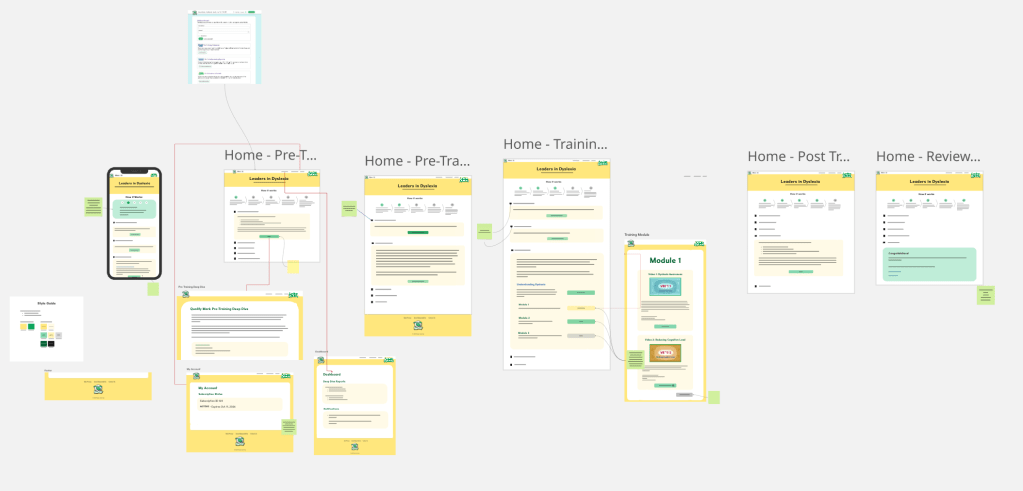
4. Developer Collaboration & Documentation
Authored a single source of truth document including metadata, content states, and logic rules for repeatable implementation.
Partnered with the developer to ensure accurate implementation of dynamic content logic.
Outcome & Impact
- Scalable Learning System: Delivered a six-lesson adaptive experience that responds to learner progress.
- Improved Efficiency: Streamlined content-to-development handoff, reducing friction and errors.
- Reusable Framework: Established a repeatable process for turning SME content into structured, dynamic web experiences.
Key Deliverables
- Information Architecture diagrams showing dynamic content flows
- Wireframes & adaptive lesson prototypes
- Relational content models for modular reuse
- Developer-ready documentation of logic and content states
Reflection
This project demonstrated the full spectrum of content design, IA, and systems thinking. By translating complex SME knowledge into a dynamic digital system, I created a workflow and content architecture that supports scalable, user-centered learning experiences.
 Emily Meadows