
Case Study: Psychology‑Informed Information Architecture
Designing intuitive content structures grounded in cognitive research
Overview
For my Master’s thesis project, I applied cognitive psychology principles to build a search‑first information architecture that supports diverse user mental models. The goal was to create an IA and taxonomy that prioritizes findability, clarity, and user confidence — rather than forcing users into rigid, traditional structures.
Role: Information Architect & Research Lead
Skills: User Research & Persona Development, Cognitive Psychology, Taxonomy & Labeling, IA Mapping, Content Strategy
Project: FoodCreations.com Thesis
The Challenge
Traditional hierarchies often assume a one‑size‑fits‑all mental model, which can make content hard to find or use. The challenge was to design a content system that:
- Reduces cognitive load for users with different backgrounds and priorities
- Respects diverse user goals and decision patterns
- Supports intuitive navigation and search
My Role and Approach
1. User Research & Mental Model Mapping
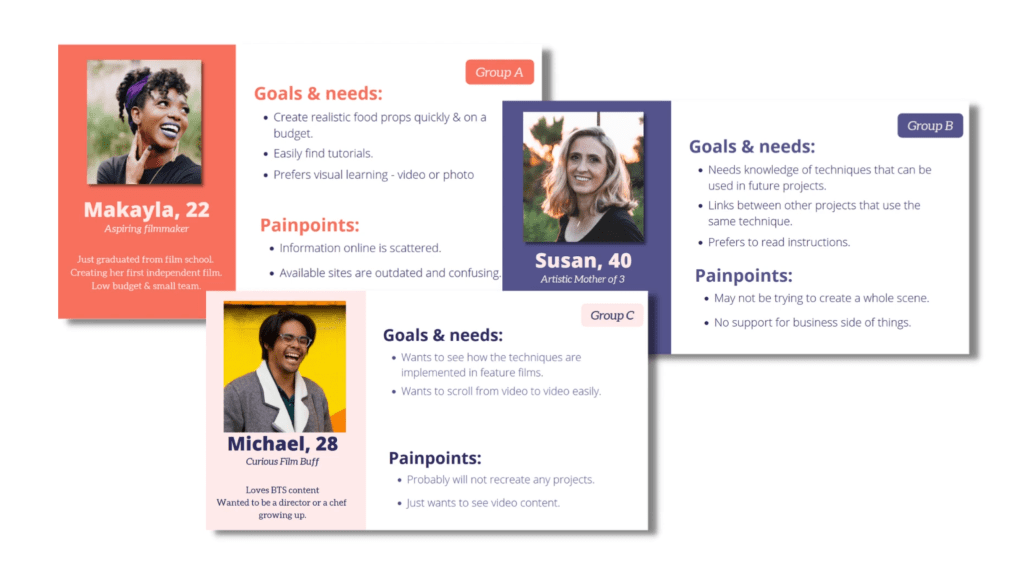
- Conducted qualitative research to understand how different users think about discovering and exploring food and recipe content.
- Developed detailed personas with distinct goals, pain points, and cognitive styles.
2. Cognitive Load Analysis
- Applied principles from cognitive psychology (e.g., mental models, working memory limits) to inform navigation logic.
- Identified points where traditional IA structures create unnecessary mental effort.
3. Search‑First Taxonomy Design
- Built a taxonomy optimized for search and findability, not just hierarchical browsing.
- Designed labels and groupings aligned with how users think rather than how systems are usually organized.
4. IA Mapping & Prototyping
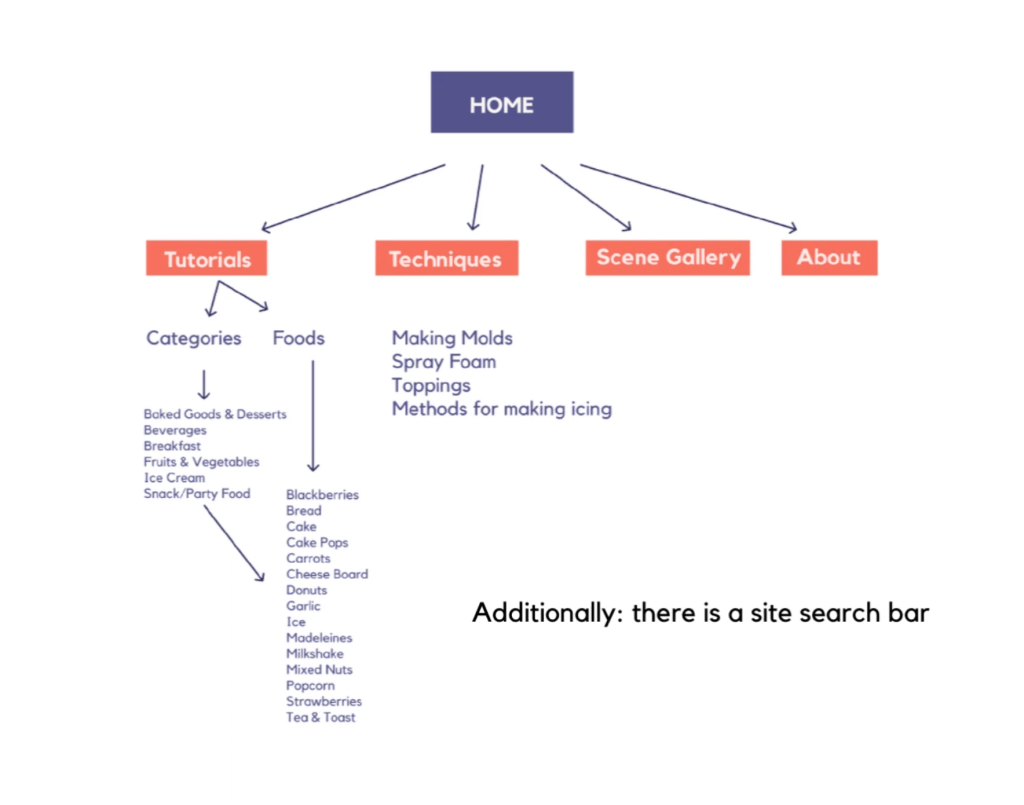
- Created IA maps demonstrating how users with different mental models would approach the same content.
- Built prototypes showing search‑first navigation paths and comparative IA experiences.
Outcome & Impact
- User‑Centered Taxonomy: A structure that supports diverse discovery patterns instead of rigid hierarchies.
- Improved Findability Logic: Navigation and search paths that reflect real user thinking strategies.
- Research‑Based IA Blueprint: A methodology that can be applied to SaaS and content‑heavy platforms to improve intuitive content access.
- While this project was academically grounded, the approach directly translates to product environments where content findability and cognitive clarity are critical.
Key Deliverables
- Detailed user personas with mental model maps
- Cognitive load analysis insights
- Search‑first taxonomy framework
- IA maps with comparative flows
- Prototypes illustrating IA patterns
Reflection
This work reinforced how deeply cognitive psychology can and should inform content design. By starting with how users think, rather than how platforms are traditionally built, systems can become far more intuitive and effective — especially for diverse audiences with different goals.
 Emily Meadows